

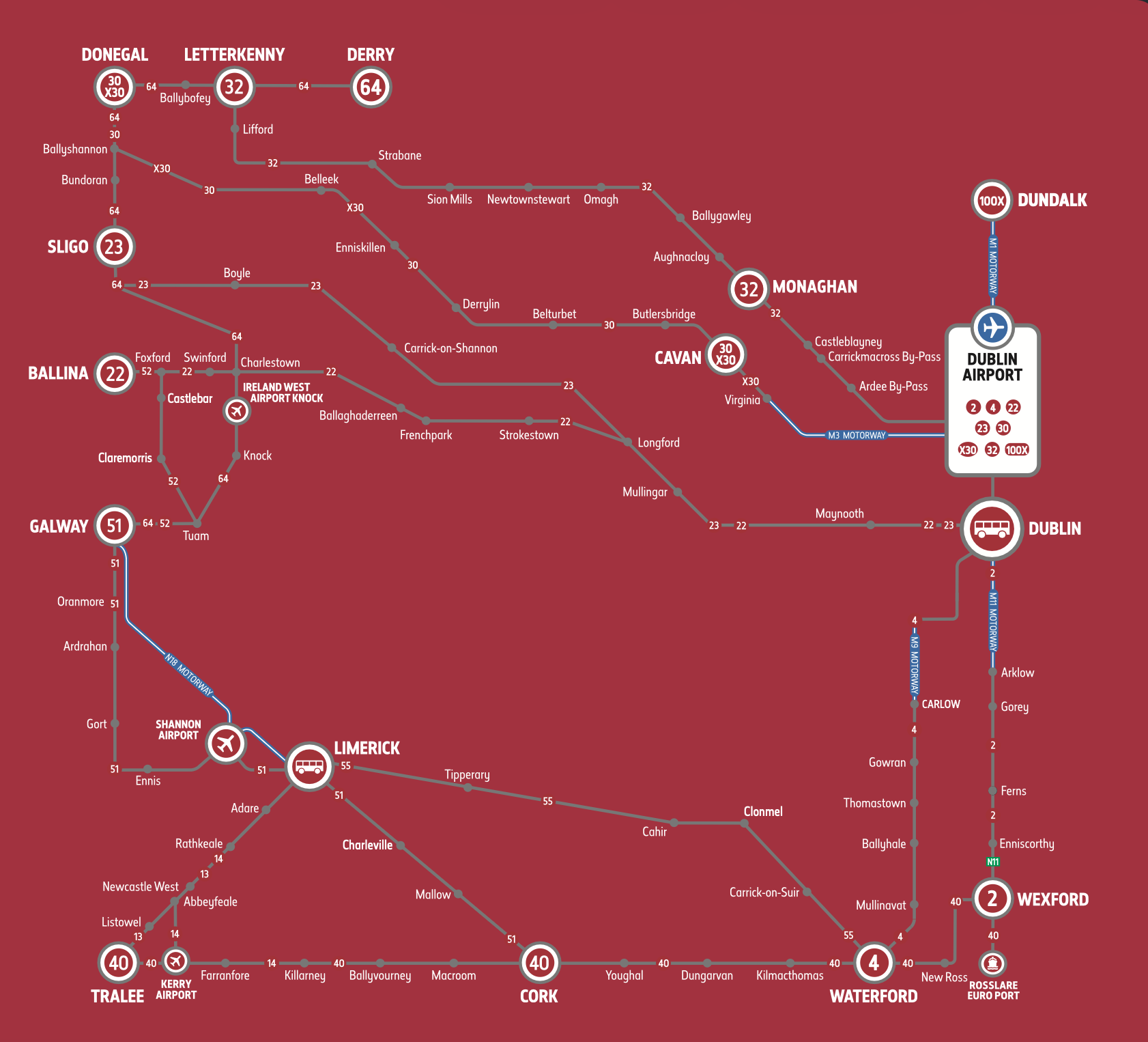
A review is under way into the future of Bus Éireann’s Expressway network, with reports suggesting several intercity routes — including Dublin–Wexford, Dublin–Waterford, Cork–Rosslare, Cork–Limerick, and Tralee–Rosslare — are being assessed for viability.
That word, “viability,” is worrying. It’s become shorthand for whether a service makes enough money to justify its existence, but in reality, Expressway is one of Ireland’s most valuable public transport assets — both environmentally and socially.
Expressway Is the Green, Everyday Option
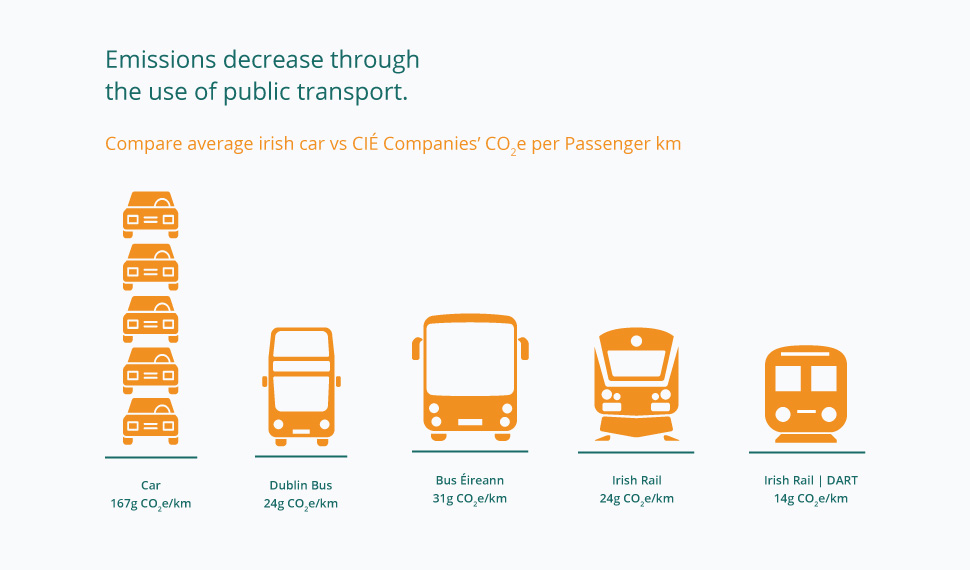
Expressway’s coaches are modern, comfortable, and relatively low-emission — and they provide one of the most efficient ways to travel between Ireland’s regional towns and cities.
Every full coach can take as many as 30–40 cars off the road, reducing carbon emissions, congestion, and fuel use. Yet, you would barely know this from the company’s public image.
Unlike private rivals that market aggressively online, Bus Éireann’s Expressway services often go unnoticed, even among regular commuters. Many people don’t realise:
These coaches run every day, not just for tourists;
They’re often faster than driving during peak hours;
And they’re one of the simplest ways to cut personal carbon output.
Time for a Nationwide Campaign
Instead of quietly reviewing routes, Bus Éireann and the NTA should be rebranding Expressway as Ireland’s intercity climate champion.
A modern advertising campaign could:
- Feature real travel-time comparisons (“Dublin to Wexford in 2 hours – no parking, no stress”).
- Emphasize that Expressway is the greener way — low-cost, comfortable, and sustainable.
- Include visual advertising on Dublin Bus stops and Luas shelters, so urban commuters are reminded that intercity travel doesn’t have to mean getting behind the wheel.
In Spain and France, national express networks like ALSA and FlixBus routinely advertise within cities, linking local and regional travel. Ireland should be doing the same.
Link Expressway to Park-and-Rides
To make Expressway more accessible — especially from suburban Dublin — Bus Éireann should coordinate with the NTA to develop park-and-ride sites near the M50, such as at Spawell (Junction 11) and Liffey Valley.
These sites would let people:
- Drive from nearby suburbs,
- Park affordably,
- Hop on an Expressway or airport service heading south, west, or north.
This model already works well in Madrid, where interurban and airport buses make quick, efficient stops at suburban junctions and park-and-rides before joining major motorways. It fills buses faster and gives passengers real alternatives to driving into the city or airport.
Make Expressway Part of a leap card cap payment
Another obvious improvement: ensure trips on Expressway count towards leap card caps.
This would encourage seamless travel — letting someone take a Dublin Bus or Luas to a park-and-ride and then connect directly to an intercity coach.
Beyond Viability — Towards Vision
The Expressway review shouldn’t just count passengers; it should measure potential — for climate benefits, rural accessibility, and reduced car dependency.
Cutting or downgrading Expressway routes would move Ireland in the wrong direction.
Instead, Bus Éireann and the NTA should double down on promoting them as a cornerstone of sustainable mobility — with better marketing, easier connections, and new suburban access points.
If Ireland wants fewer cars, cleaner air, and better-connected regions, then Expressway should not be quietly reviewed out of existence. It should be revived, advertised, and integrated — as the intercity network Ireland actually needs.
