How to Travel from Dublin to London the Easy Way — and Cut Your Carbon Footprint
If you’re travelling from Dublin to London and want a comfortable, scenic, and more sustainable alternative to flying, the Rail & Sail route is a fantastic option. It’s simple to book, relaxing, and, according to the Grantham Institute, its carbon emissions are only a fraction of those from a flight to London.
Step 1: Getting to the Ferry Port
You can easily reach the ferry terminal using a Nolan Coach, which departs from Custom House Quay in Dublin City Centre.
- Book your ticket (€3): Nolan Coaches Journey Planner
- Departure time: 6:50 a.m.
- Arrival at Irish Ferries Terminal 1: 7:20 a.m.
Note: Dublin Bus Route 53 also serves the port from Talbot Street, but it currently does not arrive early enough to catch the first ferry.
Step 2: Booking Your Rail & Sail Ticket
The Rail & Sail ticket conveniently combines your ferry and train journey in one booking.
- Book here: Irish Ferries – Rail & Sail
Step 3: Choosing the Fastest Ferry
The Dublin Swift is the fastest ferry option, taking just 2 hours 30 minutes to cross the Irish Sea.
- Departure from Dublin: 7:35 a.m.
- Arrival in Holyhead: 9:50 a.m.
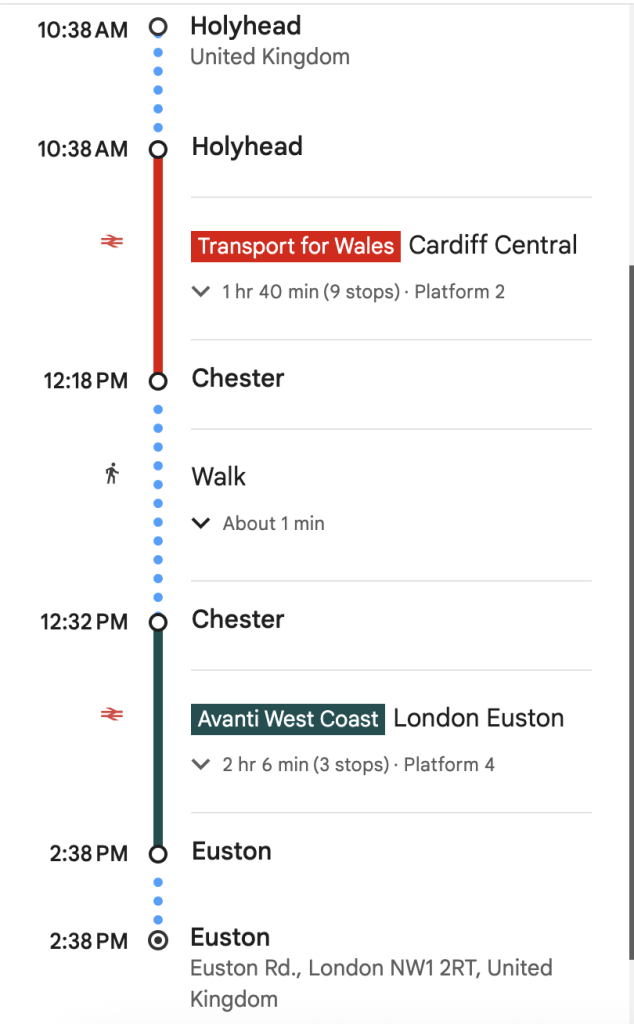
Step 4: Continue by Train to London
After arriving in Holyhead, it’s only a 600 m walk to the train station.
- Take the train to Chester, then change to an Avanti West Coast service to London Euston.
- Arrival in London: approximately 2:38 p.m.
Summary Itinerary
| Time | Step | Details |
|---|---|---|
| 6:50 a.m. | Depart | Nolan Coach from Custom House Quay or 53 bus |
| 7:20 a.m. | Arrive | Irish Ferries Terminal 1 |
| 7:35 a.m. | Depart | Dublin Swift ferry |
| 9:50 a.m. | Arrive | Holyhead, walk to station |
| 10:20 a.m. | Depart | Train to Chester, change platform for London |
| 2:38 p.m. | Arrive | London Euston |
Why Choose Rail & Sail?
Not only is this route scenic and stress-free, but it’s also much better for the planet.
According to research by the Grantham Institute, travelling by train and ferry produces only a tiny fraction of the carbon emissions generated by flying the same route. It’s a practical way to travel while helping reduce your environmental impact.